Open Paths for Active Travel
OUR CONTINUED ACTION
Current campaigns
We’re proud to have worked across a number of campaigns through the years to improve the streets of Levenshulme and Burnage.
When people don’t have access to safe spaces to walk, cycle, scoot, or use mobility aids, air pollution increases, children exercise less, public spaces become empty, and the high street becomes deserted. But solutions exist.
School streets, lower-speed limits, road filters, safer crossings, pedestrian areas, cycle lanes are just some of the campaigns we’ve supported.
Acacias school street
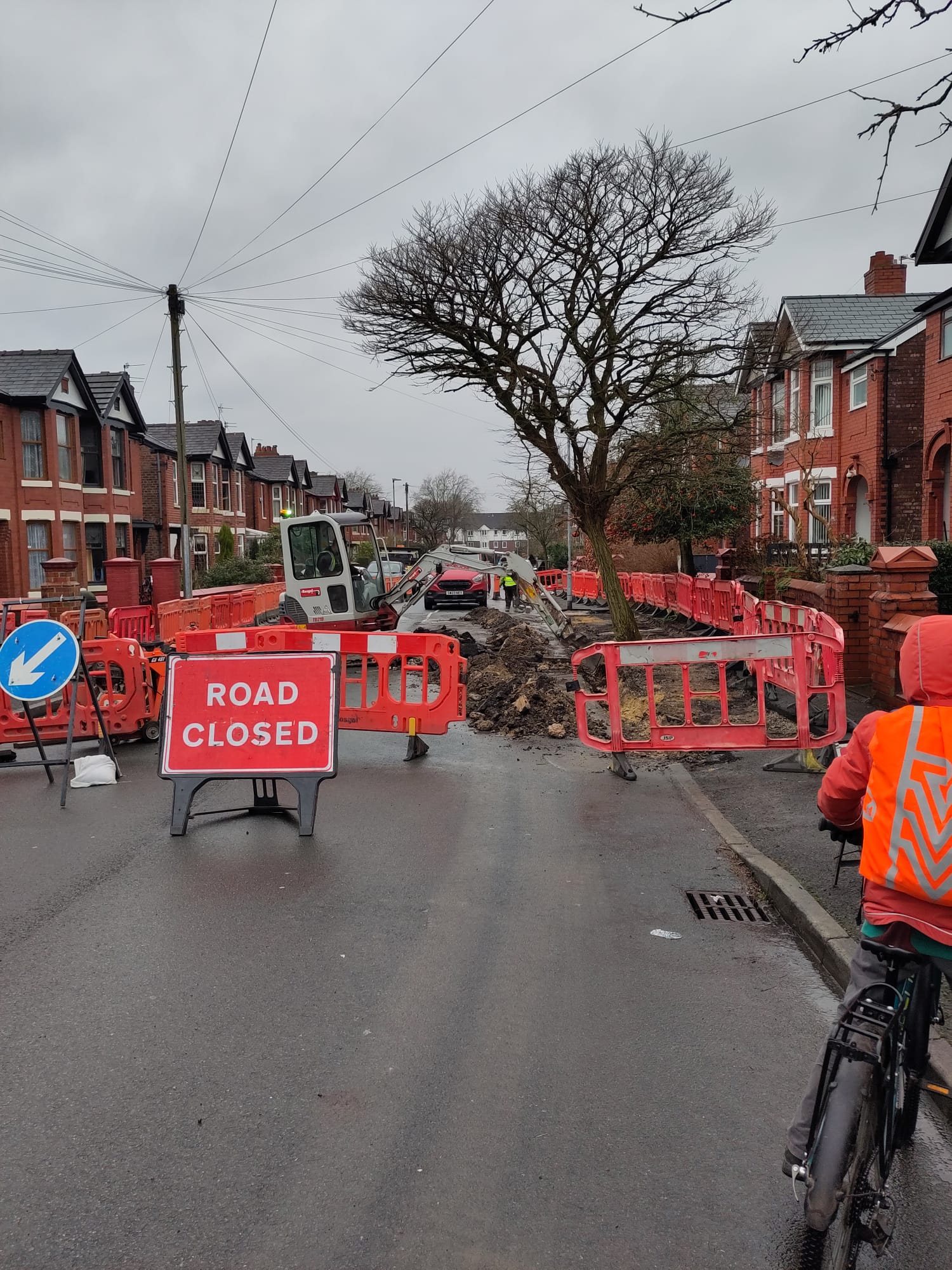
The project was a joint collaboration between the school, local residents and Manchester City council.
While we want to celebrate this great success, it’s time to take it to the next stage.
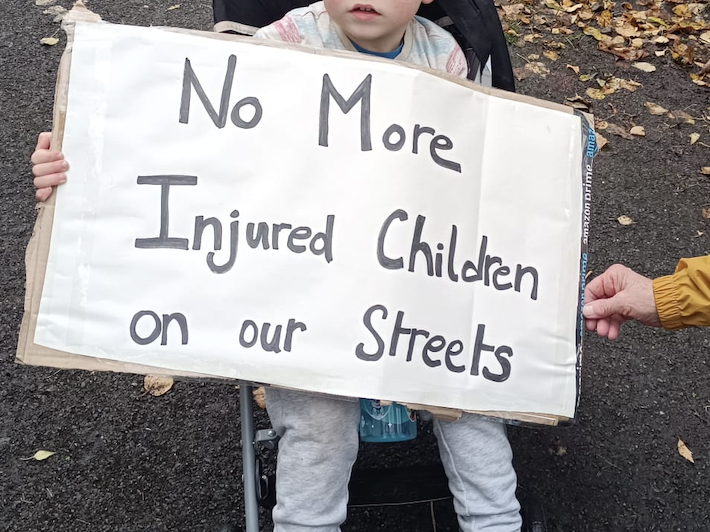
ANPR cameras are widely used to enforce school streets without the need for volunteers in London and Derby. Safety of children should be a priority for our council and properly enforced – not relying on unpaid volunteers with the risk that we may need to close the school street if volunteer numbers can’t be sustained.
Encouraging walking and cycling for short journeys in Levenshulme and Burnage makes sense. ‘39% of households do not have access to a car in Manchester’ (2021 census). We’re already doing a lot of walking in our communities! But we can do more.
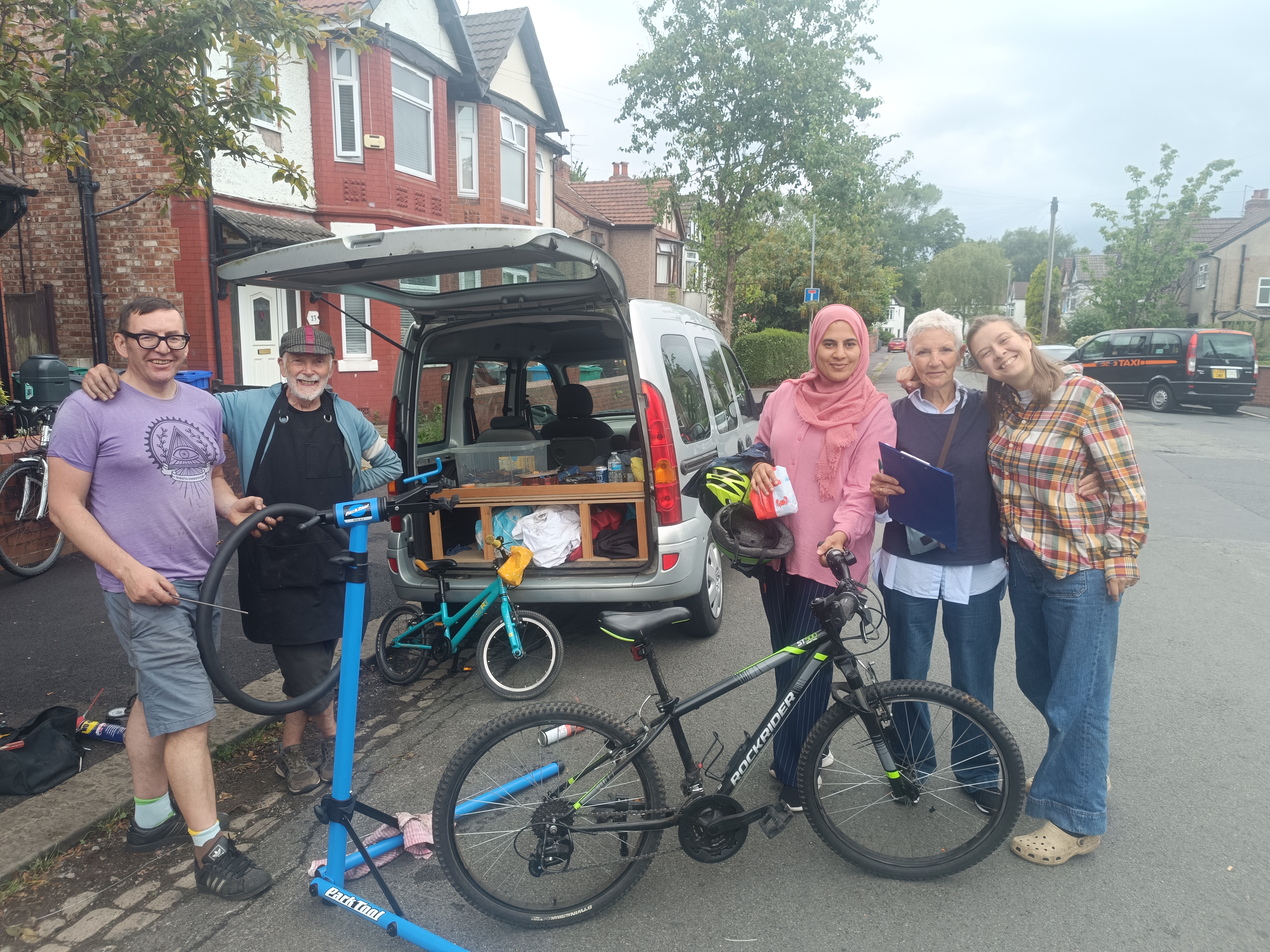
A report has shown that ‘pedestrians spend more money than people
arriving by car, and pedestrianised town centres have higher sales’ (Living Streets, 2024).
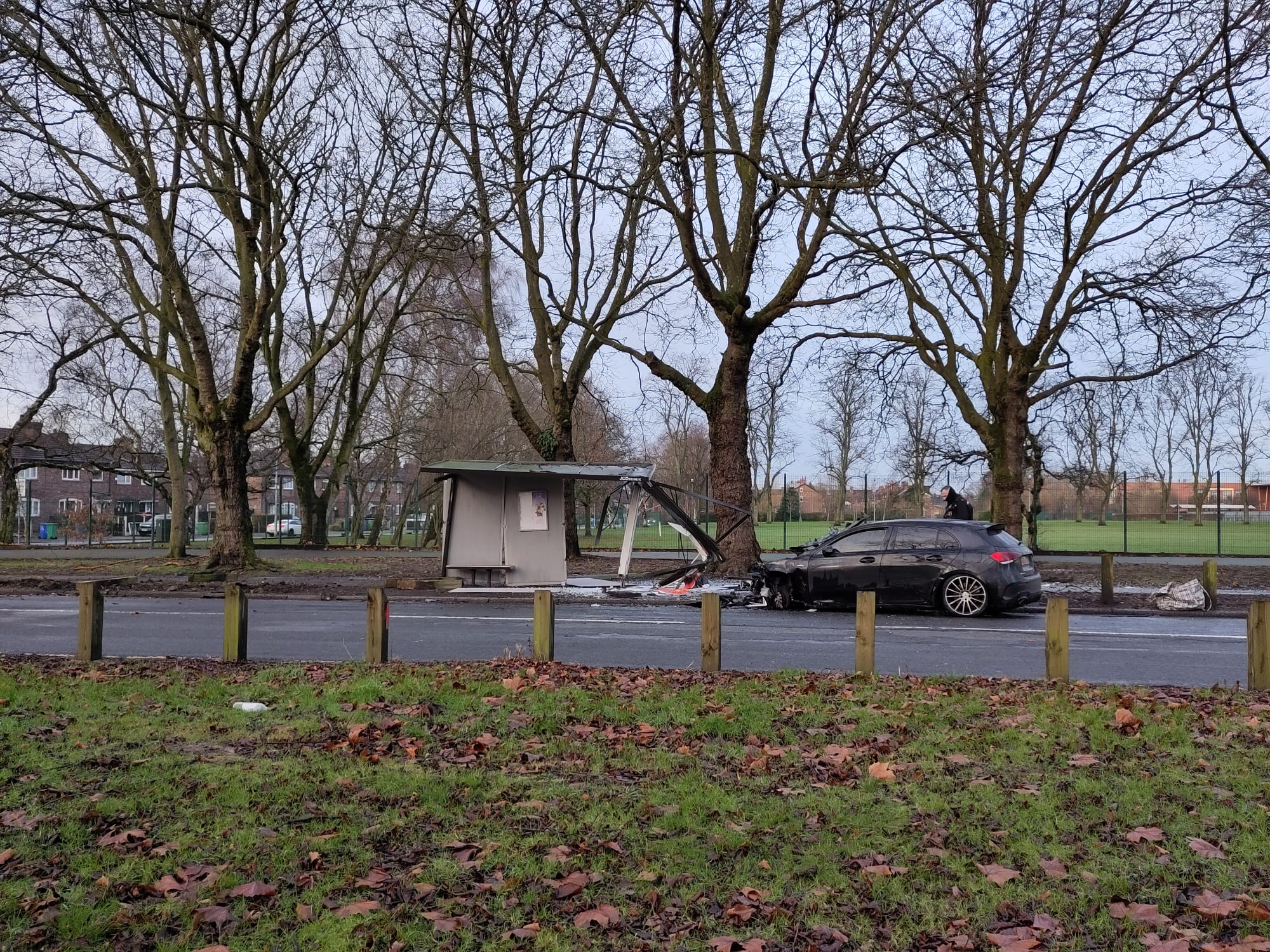
Watch this space for updates.
Marshall Road
There’s a tiny road with a lot of action in Burnage – Marshall Road.
This terrace lined narrow street is home to hundreds of people, it’s also a key walking and cycling route to three local schools as well as a bus route!
But this little street has a lot of problems too.
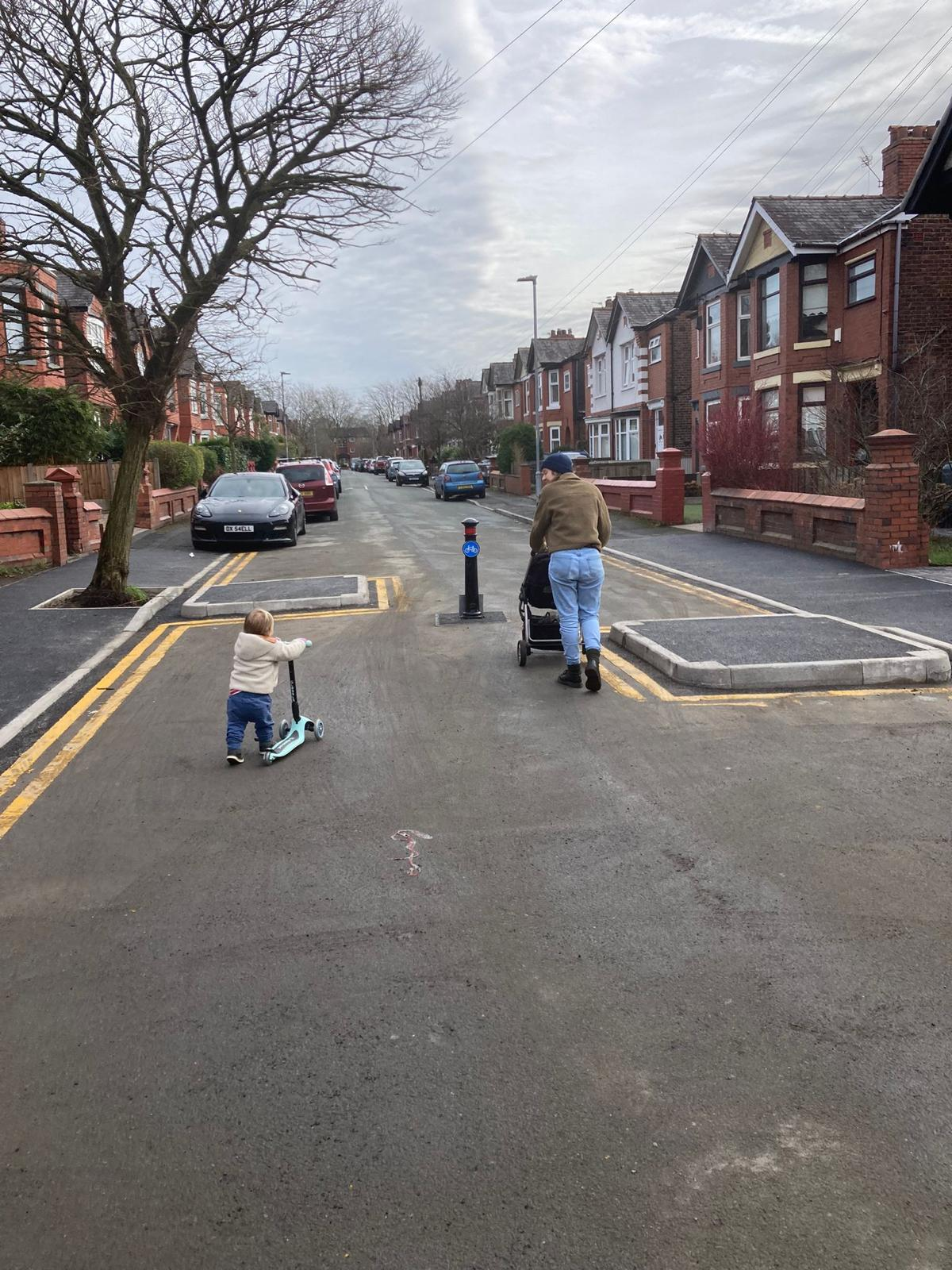
Residents deserve better and are starting to ask for it. Streets for People has joined the fight, speaking up for hundreds of people who need to use Marshall Road as a walking and cycling route to school.
So far there’s been a petition and two meetings with councillors, but no material change. We’ll keep pushing for change on this small but vital route.
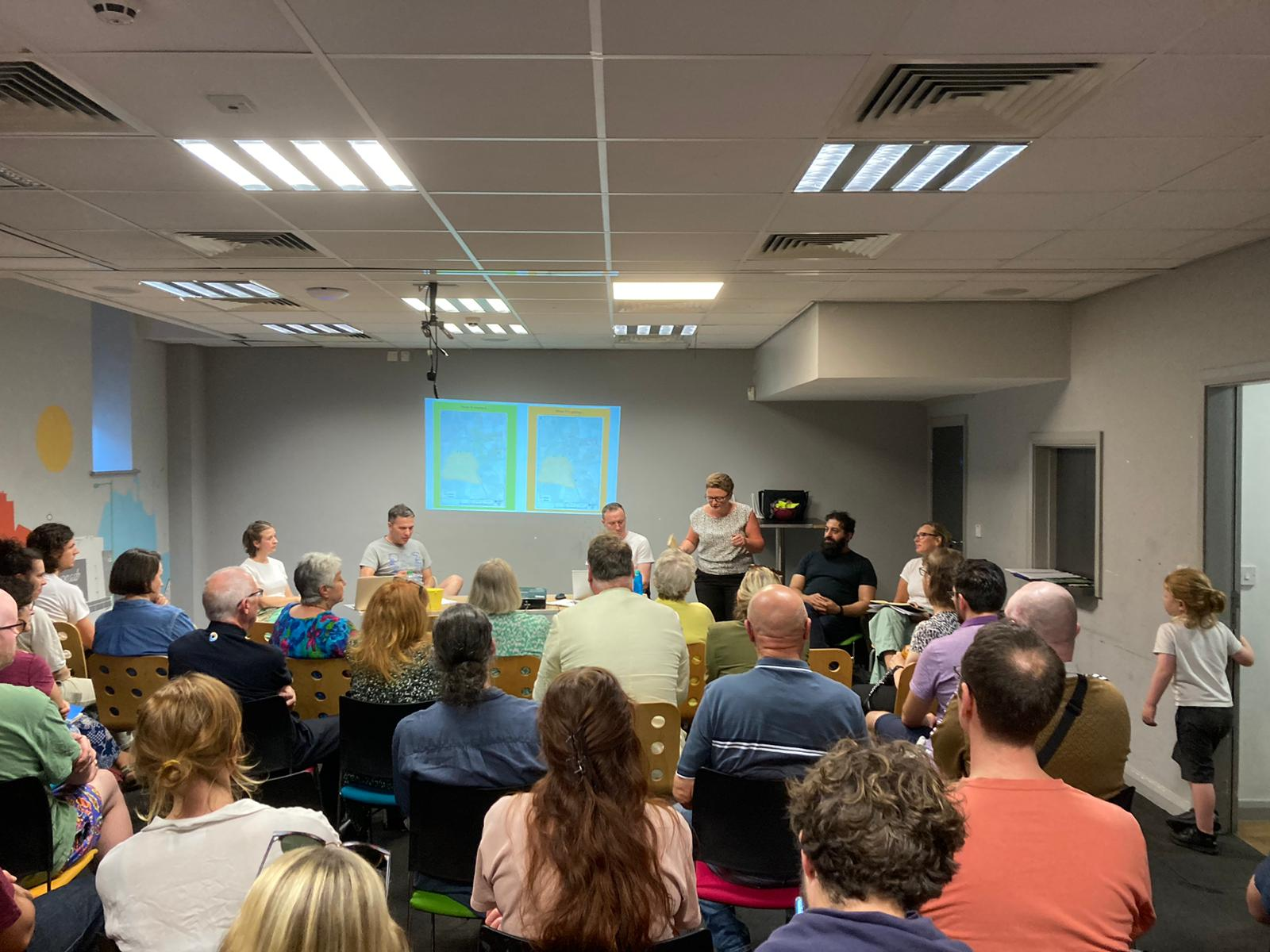
The road is double parked nearly all the way along with many of those vehicles partly on the pavement. The carriageway isn’t wide enough for two vehicles to pass each other, the pavement is partially blocked with parked cars – there simply isn’t enough room for everyone to make their journeys.
The result? There are regular problems with road rage when drivers refuse to give way to each other, parked cars are frequently hit, and pedestrians don’t have enough room on the pavements which are partially blocked by cars. All in all, it’s an unsafe nightmare and an accident waiting to happen.
The air is cleaner, the streets are safer, the community is stronger. The mental and physical health benefits are enormous, especially for children and older residents. And, last but not least, not having to pay for a car or fuel saves a lot of money!
 Streets for People - Levenshulme and Burnage